
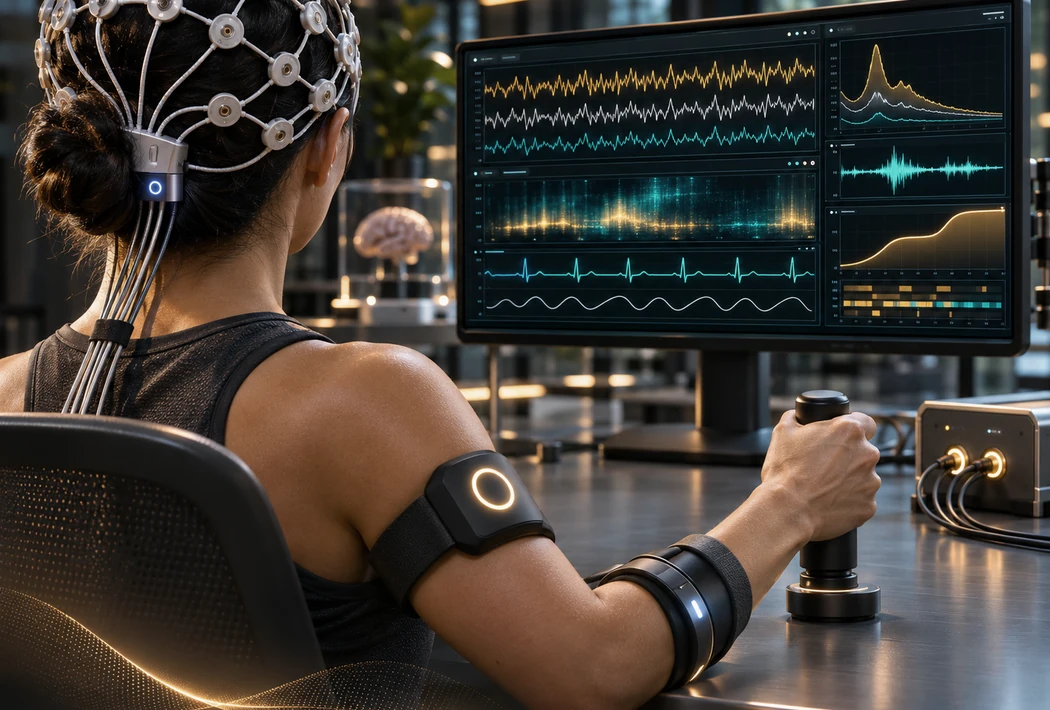
Neural sensing
EEG records electrical activity at the scalp. It can support research and certain task-specific interfaces, but does not provide general-purpose thought reading.
Technology frontier
Neuroscience, physiological sensing and embodied intelligence intersect through a common engineering problem: extracting useful information from biological signals and acting within a real environment.
Important distinctions
Brain and body signals are related, but they are not interchangeable. A credible cross-disciplinary platform must distinguish sensing, inference and application.
EEG records electrical activity at the scalp. It can support research and certain task-specific interfaces, but does not provide general-purpose thought reading.
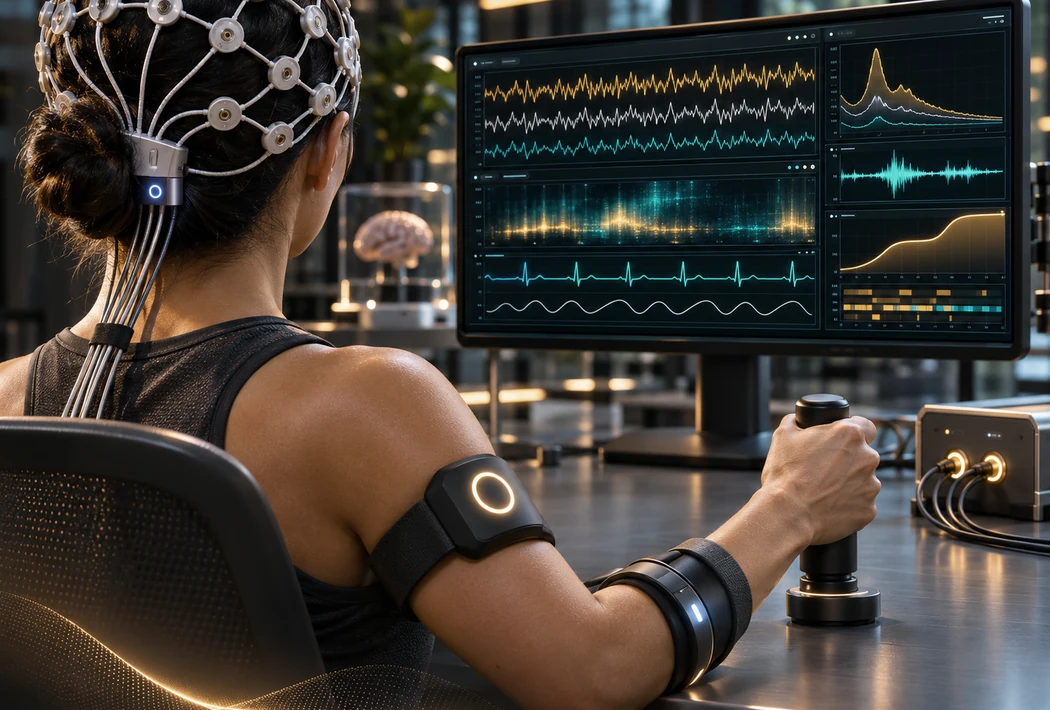
EMG measures muscle electrical activity; motion sensors and cameras can provide additional information about movement and posture.
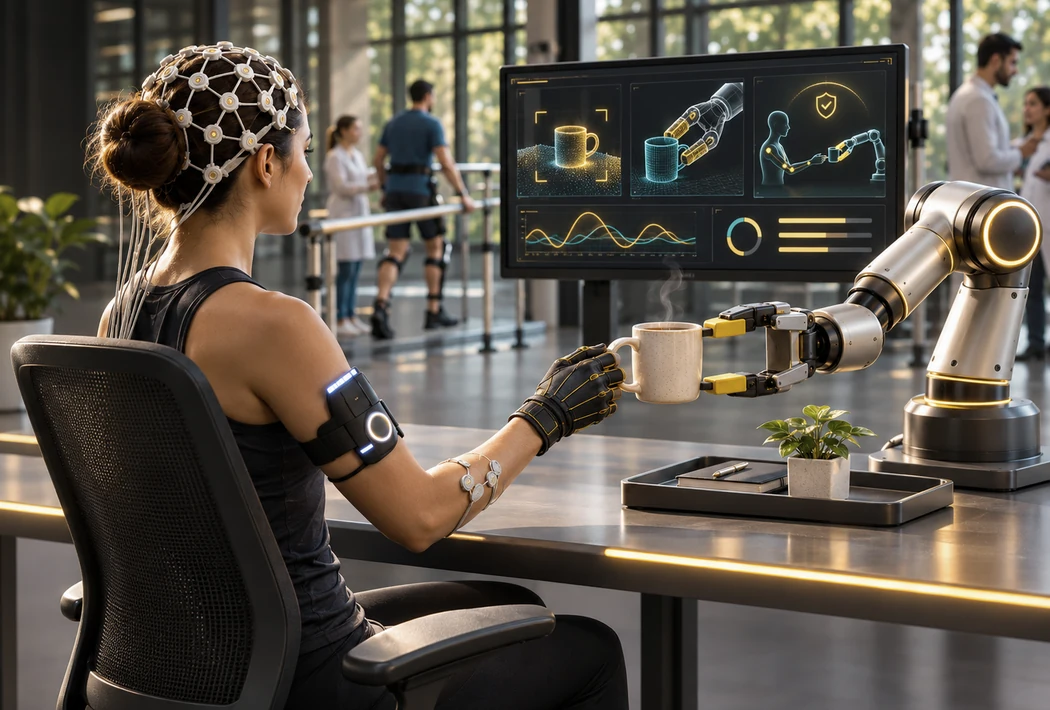
Task-specific models may support control of prostheses, assistive interfaces or robots with human oversight and safety controls.
The brain–body–AI connection
BrainBodyAI.com offers a broad digital identity for the emerging interdisciplinary research and commercial ecosystem. Its positioning does not imply that any single device or model can deliver every capability described here.
Brain–computer interfaces, neural decoding and adaptive interaction.
EEG, EMG, movement features and task-specific inference.
Prosthetics, rehabilitation and adaptive interface research.
Learning, control, robotics and human–machine collaboration.